Gartic Phone: Game Modes Explained for Beginners
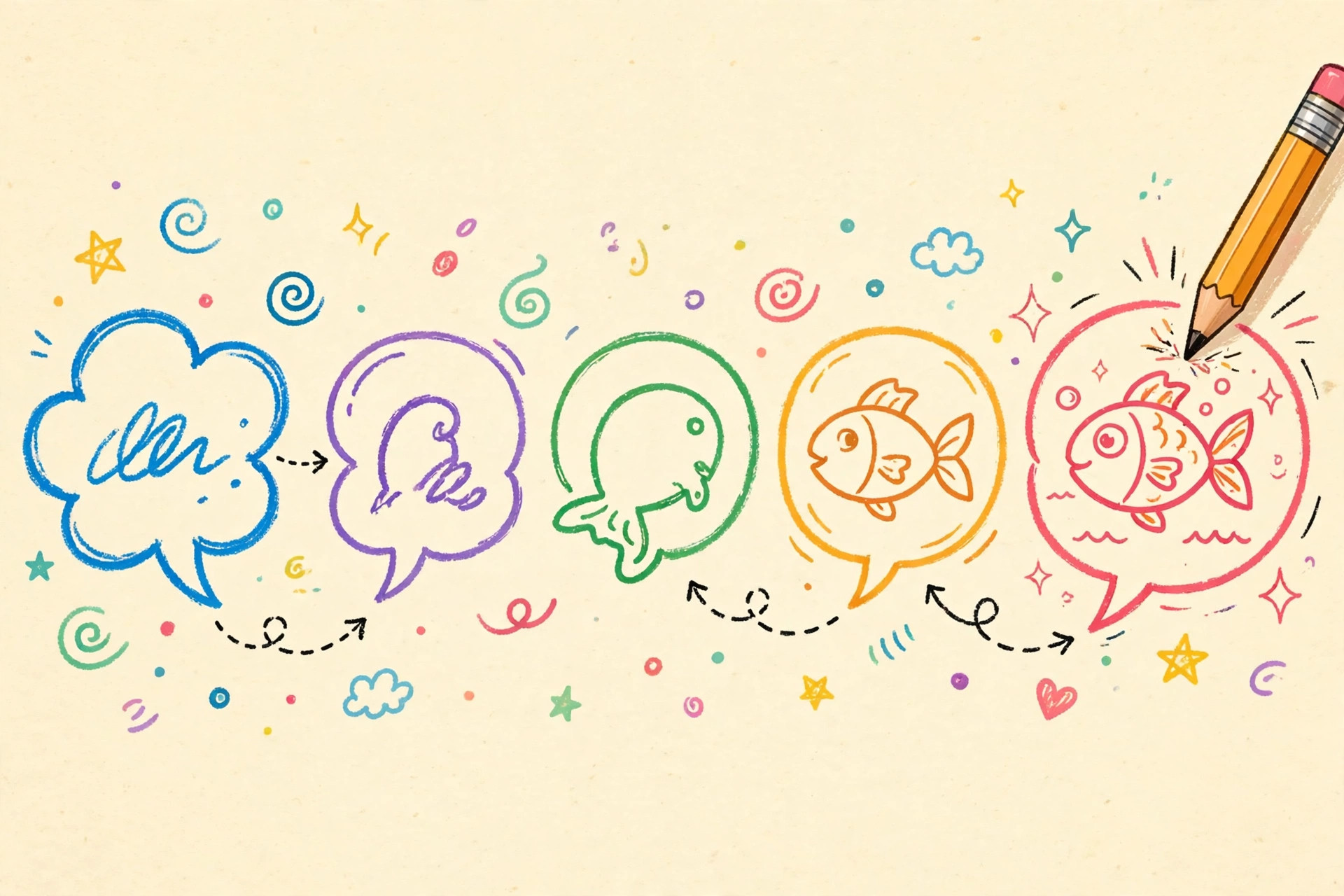
Gartic Phone turns the classic telephone game into drawing and guessing, with modes from Normal to Animation for every group.
Gartic Phone is a multiplayer party game that mixes drawing with the old telephone game. One player writes a sentence, another player draws it, and the next player guesses what the drawing shows. That chain keeps going until the original idea has changed, often in a very funny way, and everyone can watch the whole sequence at the end.
You do not need to be good at drawing to enjoy it. In fact, simple or slightly confused drawings often make the game better, because they leave room for creative guesses. The real skill is describing clearly, drawing simply, and keeping the chain moving. Once you understand the basic loop, the different game modes are easy to pick up.
How the Telephone Loop Works
Every game starts with a written prompt. Each player writes a sentence, such as "a cat wearing sunglasses on a beach" or "a robot learning to dance." The game then passes those sentences to other players, so you never draw your own prompt.
Next, you draw the sentence you receive. After that, someone else sees your drawing and writes a sentence describing what they think it shows. That new sentence goes to another player to draw, and the pattern repeats: write, draw, guess, draw, guess. When the round ends, the game reveals each chain from start to finish, so you can see exactly where a cat became a tiger, a beach became a desert, or sunglasses became a pair of eyes.
Game Modes Explained
Gartic Phone offers several preset modes. They all use drawing and guessing, but each one changes what you draw, what you see, or how the result is scored. Start with Normal, then try one new mode per game night.
Normal
Normal is the classic mode and the best place for beginners. Players alternate writing and drawing until the chain is complete. There are no extra twists, so you can focus on clear prompts, simple drawings, and honest guesses. If your group has never played before, play Normal first.
Secret
Secret works like Normal, but your creations are hidden during the game. You cannot peek at earlier steps in the chain, which makes the final reveal much more surprising. This mode is ideal for groups that love surprises and do not want to guess how the chain is going yet.
Knock-Off
Knock-Off tests memory and speed. You see a drawing for a short time, then try to copy it from memory while the clock gets faster. Details drop away with each copy, so the final version often looks very different from the first. It is fast, tense, and great for competitive groups.
Animation
Animation turns the chain into a short moving sequence. Players draw consecutive frames based on the previous drawing, and the results play back like a rough cartoon. The movement is often jerky and unpredictable, but that is part of the charm. Keep each frame simple and change only one thing at a time for the smoothest result.
Score
Score adds points to the guessing game. Players try to earn the highest score, which makes it the most competitive preset mode. Use Score when your group wants a winner, rather than just a funny reveal. It still works best when everyone keeps prompts fair and guesses honestly.
Icebreaker
Icebreaker uses fun get-to-know-you questions instead of random prompts. Players answer with drawings, which are then shared with the group. It is a good choice for new teams, classes, or mixed groups who are still learning about each other.
Complement
Complement starts with a few basic lines. The next player adds to those lines and interprets them in a new way, and the drawing keeps growing from there. The results are often surreal, because no one controls the final picture. This mode rewards imagination more than careful drawing.
Masterpiece and Crowd
Masterpiece removes the time pressure so players can take their time and try to make their best drawing. It suits smaller, calmer groups. Crowd, by contrast, is built for large parties of 15 or more players, where long chains and many different interpretations create the biggest surprises.
How to Create or Join a Lobby and Invite Friends
To start a game, create a lobby, choose a nickname, and pick a game mode. You can then share the lobby link with friends so they can join the same room. Most groups also use a voice call alongside the game, because hearing reactions during the reveal is half the fun.
To join a game, open the link shared by the host and enter a nickname. Check that you are in the right lobby before the host starts, because the game begins once everyone is ready. If a friend joins late, it is usually easier to wait for the next round than to restart a chain in progress.
The host controls the mode and basic settings for the lobby. Good hosts explain the mode before starting, especially if it is a first game. A quick example helps: "In Normal, you write, then draw, then guess. Keep it simple and do not worry about perfect art."
Drawing Tips for Non-Artists
Draw the main idea first. If the prompt is "a dog catching a ball," draw a simple dog shape and a ball before adding ears, tails, or background details. The guesser needs the subject and the action, not a finished illustration.
Keep colors simple and use shapes, not words: a yellow circle for the sun, a blue line for water, and a stick figure for a person are often clearer than a detailed scene. If something is hard to draw, show what it does, like a dancing robot with bent arms and motion lines.
Do not spend the whole timer on one small detail. A complete but rough drawing is much easier to guess than a perfect drawing of only half the prompt. When time is short, finish the outline, add one clear clue, and submit.
Guessing Tips
Describe what you actually see, not what you think the original prompt must have been. If the drawing shows a round yellow shape with ears, write that, even if you suspect it was meant to be a cat. Honest guesses keep the chain funny and fair.
Name the subject, the action, and the setting when you can. "A mouse eating cheese in a kitchen" gives the next artist far more to work with than just "a mouse." If you are unsure about one part, guess the clearest part and keep the sentence short and specific.
Best Settings for a First Game Night
For a first game night, choose Normal mode, invite four to eight players, and keep the timer generous. Small groups finish faster, and everyone gets to see how their chain changed. Play one full round, watch the reveal together, and then decide whether to try Secret or Knock-Off.
Agree on a few simple house rules before you start. Keep prompts friendly, avoid very long sentences, and do not use words that are impossible to draw, such as abstract ideas with no clear picture. Prompts with a person or animal, an action, and a place tend to work best.
End the night with a mode that matches your group's energy: Secret for extra surprise, Knock-Off for a challenge, or Masterpiece for a calmer finish.
Try Similar Draw-and-Guess Games on Playvizo
If you enjoy the draw-and-guess loop, Playvizo has similar browser games you can try right away, including Crocodile Online Draw and Guess, Draw and Guess, Guess the Drawing, and Drawing Carnival. These games focus on the same core fun: looking at a drawing, guessing what it shows, and enjoying how quickly a simple picture can be misread.
FAQ
What is Gartic Phone?
Gartic Phone is a multiplayer telephone game that combines writing and drawing. Players alternate writing prompts and drawing them, then guess what each drawing shows, until the original idea has changed in a surprising way.
Which Gartic Phone mode should beginners start with?
Start with Normal. It has no extra twists, so new players can learn the write, draw, and guess loop before trying Secret, Knock-Off, Animation, or Score.
Do I need to be good at drawing to play?
No. Clear and simple drawings work better than detailed art. Focus on the main subject and action, and let the guesses create the humor.
Can I play Gartic Phone on Playvizo?
No, Gartic Phone is not hosted on Playvizo. You can, however, play similar draw-and-guess games on Playvizo, including the titles linked in this article.
How many players do I need?
A group of four to eight players works well for a first game, because chains stay easy to follow. Larger groups create longer chains, and Crowd mode is designed for 15 or more players.